Episode Summary
Executive Summary: The episode examines Bitcoin, blockchain, and especially ICOs as new forms of decentralized value transfer and fundraising. The hosts explain money as a trusted ledger, contrast Bitcoin’s promise with its volatility, and argue that ICOs can be both innovative and deeply fraudulent. They debate whether regulation should protect investors or risk stifling legitimate experimentation.
Main Topics: Money as a trusted ledger: The hosts frame money as a record-keeping system sustained by trust, using central banks, banks, and social pressure as mechanisms that make transactions reliable. Bitcoin and blockchain mechanics: Bitcoin is presented as a decentralized, immutable ledger secured by cryptography and distributed across miners’ computers, making alteration difficult. Volatility and limits of Bitcoin as currency: The discussion emphasizes that extreme price swings discourage everyday use, even if the system is secure enough to function as money. ICOs and tokens as fundraising tools: The hosts distinguish tokens from cryptocurrencies and explain how companies can raise capital by issuing tokens tied to future products, services, or cash flows. Fraud, speculation, and investor risk: A major concern is that many ICO buyers are speculating rather than evaluating fundamentals, enabling scams and misleading offerings. Regulation and the SEC’s approach: The conversation centers on whether ICOs should be regulated as securities, balancing investor protection against innovation and global arbitrage. Potential legitimate uses of tokens: Despite skepticism, the episode notes tokens could help crowdfunding, platform launches, and competition by incentivizing users and early adopters.
Key Arguments: Money works because people trust a ledger of transactions, not because of a direct link to gold or physical assets. Bitcoin’s innovation is a decentralized, tamper-resistant ledger secured by cryptography and distributed recordkeeping. A currency can be technically sound but still fail as money if volatility makes it inconvenient for transactions. ICOs differ from Bitcoin: tokens are often tied to a company, platform, or future product and can function like crowdfunding. Many ICOs are risky because investors chase quick gains without researching whether the project is legitimate. The SEC’s distinction between utility tokens and security tokens is meant to identify offerings that are effectively unregulated securities. A country cannot fully stop ICO activity because offerings can be launched abroad and purchased with Bitcoin across borders. Regulation should target fraud and securities-like offerings without eliminating all token-based fundraising. Tokens may help new platforms compete by rewarding early users and solving chicken-and-egg adoption problems. Blockchain and cryptography are valuable even if many ICOs are not; the technology may have broader legitimate uses in finance and cybersecurity.
Data Points: Bitcoin price mentioned at opening: $14,000 to $15,000+; later around $7,000 - The episode opens with Bitcoin’s rise and then notes its sharp decline and volatility. Potential Bitcoin target: $17,000 - Referenced as a possible next price milestone during the intro. Banana Coin example: 1 token linked to the price of a kilo of bananas - Used as an example of a token tied to a real-world commodity and plantation project. UE Token fundraising: $40,000 - Example of a dubious token sale that raised money from inattentive investors. Podcast token example: Millions of dollars (hypothetical) - The hosts discuss how easily a simple token sale with a website and paper could raise large sums. Platform fee example: Lower percentage fee than Uber/Lyft - Illustrates how tokens could be used to incentivize users and compete in winner-take-all platform markets. Investor return temptation: 'thousand percent ROI' - Used to describe the speculative mindset driving many ICO buyers.
Pivotal Quotes: "In terms of cryptocurrencies generally, I can say almost with certainty that they will come to a bad ending." — Luigi: A strong early warning about the long-term fate of cryptocurrencies. "What money is, is simply a trusted ledger." — Luigi: Defines the conceptual foundation of the episode’s explanation of money and currencies. "We don't need some like newfangled cryptocurrency. We already have crowdfunding platforms that allow companies to easily raise money for a future product." — Aaron Powell: Summarizes the skeptical view that ICOs add little beyond existing fundraising tools.
Implications: Listeners should view Bitcoin as a technological breakthrough but ICOs as a high-risk mix of innovation, speculation, and fraud. The likely future is tighter regulation of securities-like tokens, with blockchain surviving beyond the ICO boom.
About Capitalisnt
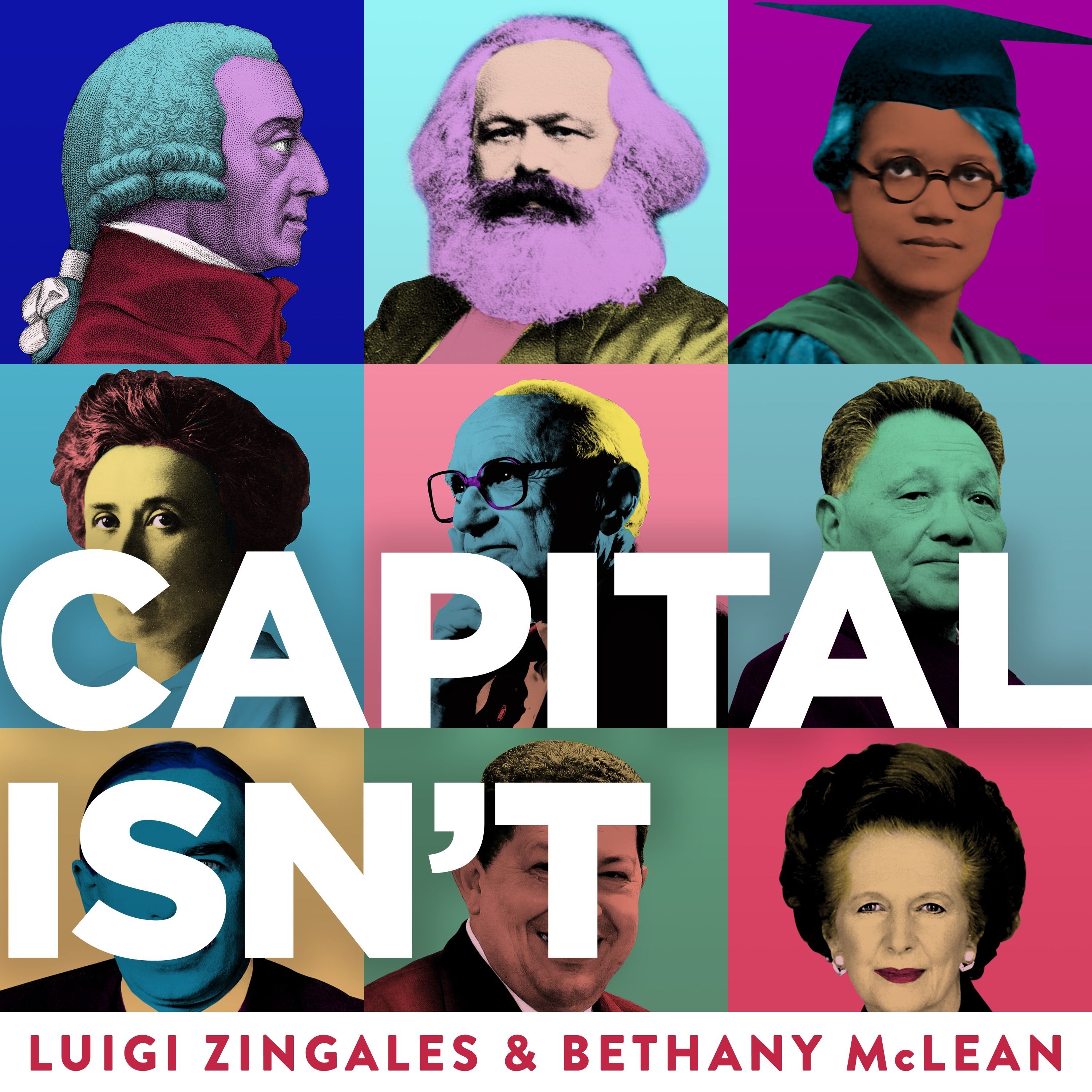
Is capitalism the engine of destruction or the engine of prosperity? On this podcast we talk about the ways capitalism is—or more often isn’t—working in our world today. Hosted by Vanity Fair contributing editor, Bethany McLean and world renowned economics professor Luigi Zingales, we explain how capitalism can go wrong, and what we can do to fix it. Cover photo attributions: https://www.chicagobooth.edu/research/stigler/about/capitalisnt. If you would like to send us feedback, suggestions fo...