Episode Summary
Executive Summary: The episode argues that U.S. health care is costly and underperforms because of weak risk pooling, high prices, lobbying, marketing, administrative complexity, and distorted incentives. The hosts discuss Medicare for All, public options, drug-price negotiation, and supply-side reforms, while stressing that any transition must preserve innovation and expand doctor supply.
Main Topics: U.S. health care underperforms relative to peer ქვეყნies: The hosts compare U.S. spending and outcomes with other rich countries, arguing that Americans pay far more for worse life expectancy, infant mortality, and preventable deaths. Insurance market failures and the case for mandates: They explain why voluntary insurance fails due to adverse selection: healthy people avoid coverage while sick people seek it, making some form of mandate or universal system necessary. Prices, bargaining power, and monopsony: The discussion centers on how concentrated public purchasing can lower drug prices, but also how a single buyer can create bilateral monopoly concerns and pressure innovation. Lobbying, marketing, and rent-seeking: The episode details how pharmaceutical and device firms influence policy, sponsor favorable research, and use direct-to-consumer ads to stimulate demand and sustain high prices. Political debate over Medicare for All and public options: The hosts contrast Sanders/Warren-style single-payer visions with public-option transitions, debating redistribution, status quo bias, and the political difficulty of removing private coverage. Supply-side constraints and administrative frictions: They note that expanding coverage without increasing doctor supply or reducing administrative fragmentation would raise costs and worsen bottlenecks, especially under U.S. licensing and tax structures. Transition strategy and innovation tradeoffs: The conversation emphasizes that moving to universal coverage must be gradual and paired with regulation, doctor training, and safeguards so cost controls do not crush medical innovation.
Key Arguments: The U.S. spends a far larger share of GDP on health care than peer nations but achieves worse outcomes, so the system is not delivering value. A voluntary insurance market cannot work well because healthy people opt out and sick people opt in; universal coverage or mandates are needed for risk pooling. Health care prices are inflated by concentrated bargaining power, especially when insurers or governments act as monopsonists negotiating against patent-protected suppliers. Pharmaceutical and device companies exert influence through lobbying, revolving doors, sponsored research, and direct-to-consumer advertising, all of which can push up costs. Medicare for All or a public option could reduce some costs, but only if paired with supply-side reforms such as more doctors, fewer administrative barriers, and tighter control of marketing. Government negotiation over drug prices is sensible, but policy must preserve enough expected profit to sustain R&D and future innovation. A sudden switch to universal single-payer could provoke backlash because it reallocates existing employer-based health benefits and threatens status quo arrangements. Not all improvements in medicine should be adopted automatically; cost-benefit analysis should block marginally better but much more expensive procedures and cosmetic drug rebrands.
Data Points: U.S. health care spending share of GDP: 17% - The U.S. spends about this much of GDP on health care, far above many peers. France health care spending share of GDP: 11% - Used as a comparison point for lower spending among rich countries. Turkey health care spending share of GDP: 4% - Illustrates how much less some countries spend on health care. Life expectancy in Japan: almost 83 years - Compared with the U.S. to show poorer American health outcomes. Life expectancy in Italy: 81 years - Used as another peer-country benchmark. Life expectancy in the United States: 78 years - Lower than Japan and Italy despite much higher spending. Amenable deaths per 100,000 in France: roughly 50 - Deaths that should not occur with timely and effective care. Amenable deaths per 100,000 in Italy: 65 - Benchmark for preventable mortality. Amenable deaths per 100,000 in the United States: 103 - Shows weaker performance of the U.S. system. Infant mortality in the United States: 6.2 per 1,000 - Higher than several peer countries. Infant mortality in France: 3.3 per 1,000 - Lower than the U.S. Infant mortality in Italy: 5.5 per 1,000 - Lower than the U.S. Infant mortality in Cuba: 5.8 per 1,000 - The transcript notes the U.S. is below Cuba on this measure. Life expectancy gap by income: 15 years - The top 1% lives about 15 years longer than the bottom 1%. People expected to drop insurance if mandate repealed: 13 million - Estimate tied to repealing the individual mandate. Premium increase from mandate repeal: at least 10% - Projected increase for ACA customers without subsidies. Industry outside money in 2018 election cycle: roughly $225 million - Used to illustrate health-care lobbying power. Former aides now in health-care industry: 267 - Revolving-door example from congressional committees. Drug/device marketing spending: about $4 billion - Estimated amount spent on pharmaceutical and medical-device marketing. Consumers reporting direct drug ads by 2002: 81% - Shows prevalence of direct-to-consumer pharmaceutical advertising. Insulin price in Canada relative to U.S.: one third - Example of successful government bargaining reducing prices. Daraprim price increase: $13.50 to $750 per tablet - Illustrates extreme pharmaceutical price hikes.
Pivotal Quotes: "The current system is not working." — Luigi Zingales: Opening argument that U.S. health care is failing on both cost and outcomes. "Health care is a basic human right, and I will fight for basic human rights." — Transcript excerpt of a Democratic candidate: Represents the political framing of universal coverage in the primary debate. "The fundamental cause of health care costs is a combination of high prices for inputs, poorly restrained incentives for overutilization, and a tendency to adopt expensive medical innovations rapidly, even when evidence of effectiveness is weak or absent." — Gaber and Skinner (quoted by Luigi Zingales): Central economic explanation for why U.S. costs are so high.
Implications: Listeners should see U.S. health care as a systems problem, not just an insurance problem. Universal coverage may help, but meaningful reform also requires supply expansion, price bargaining, and limits on lobbying/marketing.
About Capitalisnt
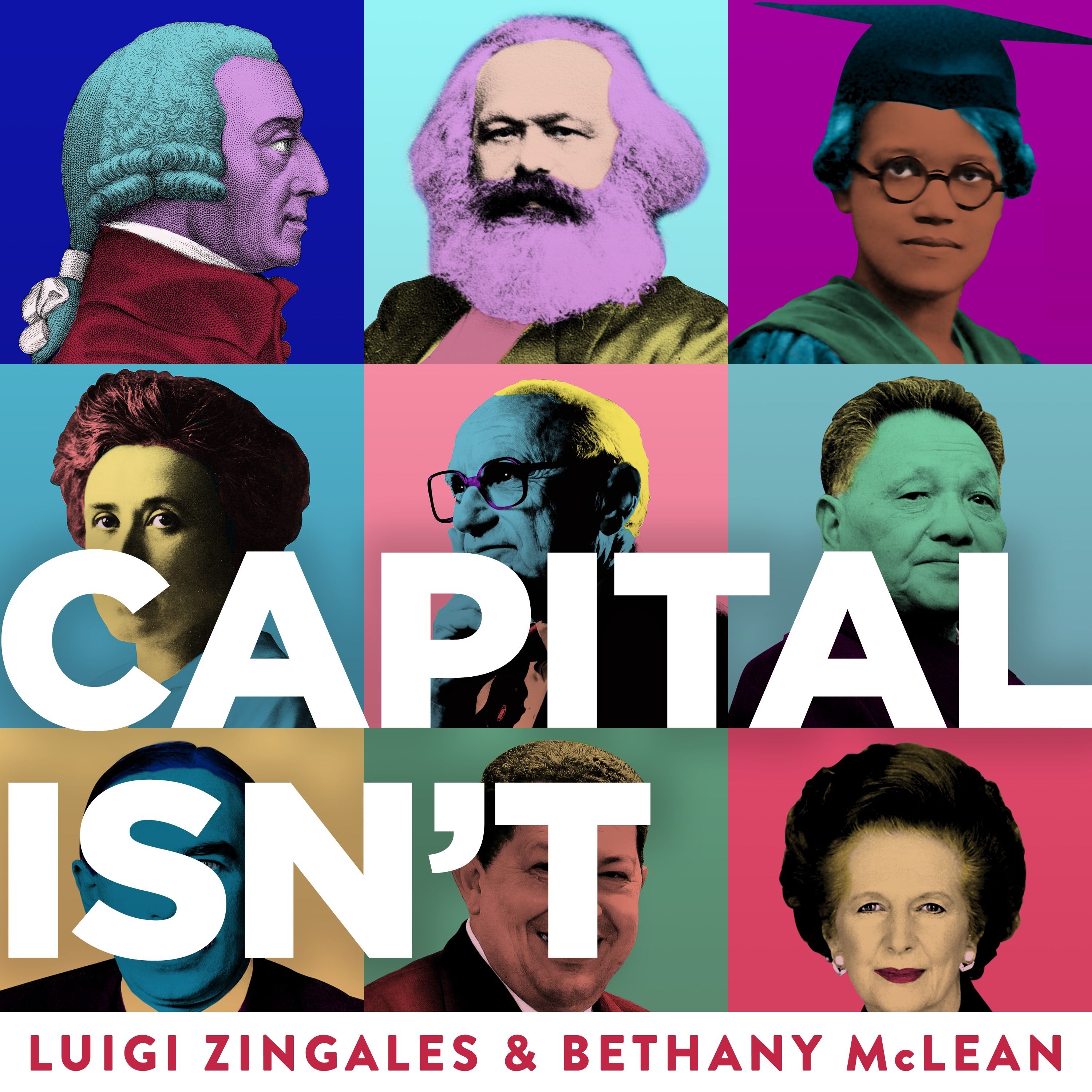
Is capitalism the engine of destruction or the engine of prosperity? On this podcast we talk about the ways capitalism is—or more often isn’t—working in our world today. Hosted by Vanity Fair contributing editor, Bethany McLean and world renowned economics professor Luigi Zingales, we explain how capitalism can go wrong, and what we can do to fix it. Cover photo attributions: https://www.chicagobooth.edu/research/stigler/about/capitalisnt. If you would like to send us feedback, suggestions fo...