Episode Summary
Executive Summary: The episode examines meritocracy’s moral and political downsides, arguing that markets reward contribution imperfectly and often inflate inequality, prestige, and elite hubris. Michael Sandel and the hosts discuss how meritocratic rhetoric fuels resentment, how center-left parties embraced it, and why a better response is democratic debate over tax, recognition, and the dignity of work rather than simple equality of opportunity.
Main Topics: The dark side of meritocracy: Sandel argues meritocracy does not merely fail in practice; it legitimizes inequality by implying winners deserve their outcomes and losers deserve theirs, corroding the common good. Efficiency vs. justice in markets: The conversation separates economic efficiency from moral worth, noting that GDP and market rewards can reflect socially unimportant activity as much as valuable work. Meritocratic hubris and elite backlash: The hosts connect elite self-justification, educational credentialism, and contempt for non-college workers to populist backlash, especially Trump and Brexit. Democratic equality of condition: Sandel proposes moving beyond equality of opportunity toward shared public spaces, class-mixing institutions, and social recognition that let all citizens hold their heads high. Rules of the game shape rewards: The discussion argues that pay outcomes, especially CEO compensation and finance, are heavily shaped by policy choices like stock buybacks and tax rules, not pure merit. Capitalism, bankruptcy, and institutional complicity: In the news segment, the Sackler/Purdue opioid case is used to show how capitalism fails when firms, regulators, distributors, and institutions all enable harm. Prestige, money, and professional sports: Messi’s contract becomes a case study in how extreme pay differentials and market allocation can coexist with non-monetary motives like team loyalty and respect.
Key Arguments: Meritocracy is problematic not just because it falls short, but because it morally rationalizes inequality and encourages winners to view success as self-made. Markets are useful for allocating talent, but market prices do not measure virtue, deserve, or social value. A large share of high GDP activity is morally ambiguous or socially unproductive, such as speculative finance or selling sugary drinks. Center-left parties helped entrench meritocratic ideology by tying dignity to higher education and telling non-college workers they can succeed only through credentials. The 2008 financial crisis exposed both the incompetence of elite governance and the weakness of institutions that were supposed to protect the public. The appropriate response is not equal incomes, but democratic equality of condition: shared schools, public spaces, transit, and mutual recognition across class lines. Tax policy should reflect not only fairness and efficiency but also social esteem for labor over capital gains and speculation. For highly consequential roles, society should select the most talented people, but without collapsing talent into moral deservingness. The Sackler/Purdue episode shows capitalism becomes abusive when powerful actors and regulators are complicit and accountability is weak. In sports, massive pay gaps are less controversial because talent is visible and easy to measure, making the system feel more like talentocracy than meritocracy.
Data Points: College-degree share of Americans: Nearly two-thirds do not have a four-year degree - Used to argue that tying dignified work and life chances to college credentials is politically and socially harmful. CEO pay ratio: Roughly 300-to-1 - Current U.S. CEO pay relative to the median worker, cited as evidence of inflated rewards. Historical CEO pay ratio: About 30-40-to-1 - The ratio a few decades earlier, used to show how compensation norms changed over time. Wall Street contributions: Barack Obama received more campaign contributions from Wall Street than his Republican opponent - Presented as evidence that center-left parties made peace with concentrated financial power. Purdue/Sackler settlement: About $4 billion and no wrongdoing admitted - Used in the news segment to illustrate how powerful actors can escape full accountability. Messi contract: $104 million for two years - Paris Saint-Germain contract discussed as a market example in professional sports. Messi pay cut willingness: 50% cut - He reportedly would have accepted a half salary to stay at Barcelona. Globalization-era timeframe: Four decades - Sandel cites four decades of stagnant wages and widening inequality under neoliberal globalization. Wall Street bailout scale: Hundreds of billions of dollars - Referenced in the 2008 bailout discussion as evidence of asymmetric rescue and elite favoritism. Nobel Prize cash award: A little bit more than $1 million - Used to contrast prestige-based recognition with extreme income accumulation.
Pivotal Quotes: "meritocracy as a system has a dark side" — Michael Sandel: Sandel’s core thesis on why meritocracy is not morally neutral. "we make more explicit and more democratic the judgments that societies inevitably make about what counts as a valuable contribution to the common good" — Michael Sandel: His proposed alternative: democratic debate over value, reward, and social esteem. "capitalism without bankruptcy is like religion without sin" — Alan Meltzer (quoted by Luigi Zingales): Used in the Purdue/Sackler discussion to emphasize the role of accountability in capitalism.
Implications: Listeners are urged to question credentialism and extreme pay gaps, support policies that honor useful work, and demand stronger institutional accountability. The episode suggests future capitalism debates will center less on efficiency alone and more on dignity, democracy, and who society chooses to esteem.
About Capitalisnt
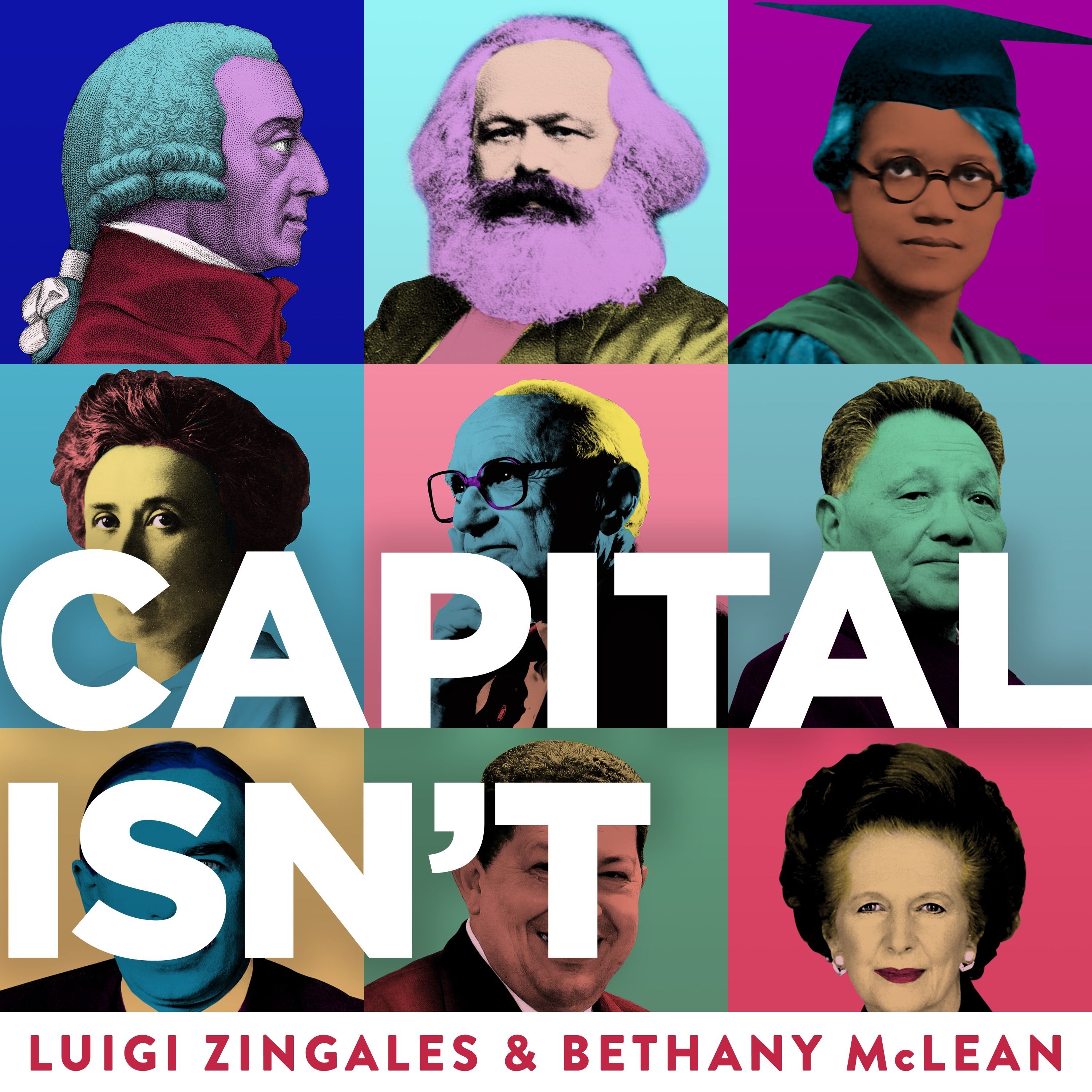
Is capitalism the engine of destruction or the engine of prosperity? On this podcast we talk about the ways capitalism is—or more often isn’t—working in our world today. Hosted by Vanity Fair contributing editor, Bethany McLean and world renowned economics professor Luigi Zingales, we explain how capitalism can go wrong, and what we can do to fix it. Cover photo attributions: https://www.chicagobooth.edu/research/stigler/about/capitalisnt. If you would like to send us feedback, suggestions fo...