Episode Summary
Executive Summary: The episode examines Martin Wolf’s argument that liberal democracy and market capitalism are philosophically linked and mutually dependent, yet both are fragile under concentrated wealth, weak institutions, and plutocracy. The hosts largely agree, but press on democracy’s meaning, elite responsibility, globalization, media incentives, and practical reforms needed to preserve both systems.
Main Topics: Democracy and capitalism as interdependent systems: Wolf argues they share core liberal values—individual agency, equality before law, and rejection of ascribed status—and that each needs the other to endure. Threats from concentration of wealth and plutocracy: The discussion emphasizes how concentrated economic power can distort elections, policy, media, and institutions, pushing democracies toward oligarchy or authoritarianism. What democracy is for: elections vs. popular will: The speakers debate whether democracy means free and fair elections or implementing what the public actually wants, and warn against leaders claiming to embody the 'will of the people.' Meritocracy, elite responsibility, and civic culture: Wolf and the hosts explore how meritocracy can become self-justifying, why elites need a sense of public duty, and how civic norms may be more important than law alone. Markets, redistribution, and the welfare bargain: Wolf argues capitalism requires a 'biggish' state to provide social insurance, education, health, and countervailing power, since pure libertarianism is politically and socially unstable. Globalization, inequality, and policy failure: The conversation questions whether globalization and financialization were structural causes of discontent or policy mistakes that failed to protect those left behind. Media, news, and democratic accountability: The hosts discuss journalism’s role in sustaining democracy, the pressure from business incentives, and proposals like taxing platforms to support local news.
Key Arguments: Market capitalism and liberal democracy rest on the same liberal values: individual freedom, equality, and rejection of inherited status. Democracy cannot survive long-term without a market economy, and capitalism cannot survive long-term without democratic institutions and rule of law. A completely free-market society would likely require autocracy or narrow plutocracy, because people demand social insurance and public goods. The state must be active enough to provide welfare, education, health, and countervailing power against rent-seeking and concentrated power. Extreme inequality and concentrated political influence, especially via campaign finance, distort democracy and move the U.S. toward plutocracy. Claims to embody 'the will of the people' are dangerous because no single popular will exists in pluralistic societies. Meritocracy is necessary but dangerous when it becomes the dominant value; it must be tempered by equality of opportunity and social responsibility. Elite responsibility and civic norms are essential; law alone is too costly and insufficient to maintain a healthy democracy. Globalization and capitalist growth created major prosperity gains, but policy failures left many behind and fueled democratic backlash. The media are central to the capitalism-democracy balance because news is a public good vulnerable to both money and soft forms of corruption such as the desire to be liked.
Data Points: Extreme destitution: fell from 80% to 10% - Wolf cites the last two centuries of global economic growth and poverty reduction Time period: over the last two centuries - Used to frame the long-run decline in global extreme destitution Population growth: more than six-fold rise - Global human population increase over the same period as poverty fell Government spending share of GDP: rose dramatically in all developed democracies over the last century - Wolf’s table shows the expansion of the state, especially for social insurance and public goods Productivity era: 19th and 20th centuries - Describes the industrial and scientific revolution that powered growth and poverty reduction Survey response window: 5 or 10 minutes - Podcast call-to-action for listener survey Call-in recording limit: up to 90 seconds - Listener voice-message instructions Italian referendum example: 65% in favor - Italy’s 1981 abortion referendum used as an example of referendum legitimacy
Pivotal Quotes: "The answer is that capitalism cannot survive in the long run without a democratic polity, and democracy cannot survive in the long run without a market economy." — Martin Wolf: Central thesis on the mutual dependence of capitalism and democracy "If somebody comes along and says, because I've been elected, I embody the will of the people... I don't accept that." — Martin Wolf: Warning against populist claims to represent a single popular will "Hope is mandatory." — Martin Wolf: Closing reflection on democratic decline in the United States
Implications: Listeners are left with a warning: capitalism and democracy are unstable unless actively maintained through institutions, welfare, civic norms, and limits on concentrated power. The episode suggests reform—not abandonment—is the path to preserving both.
About Capitalisnt
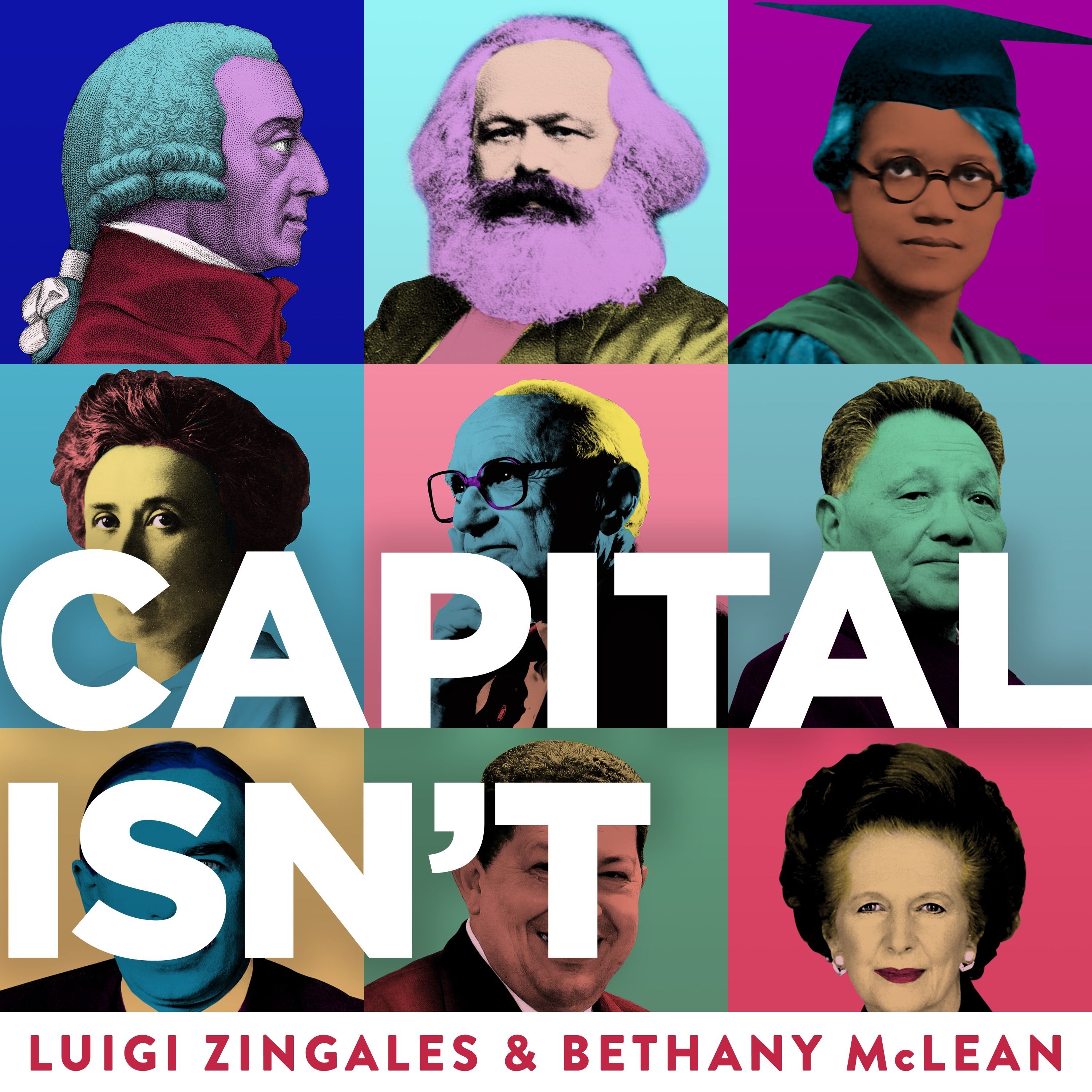
Is capitalism the engine of destruction or the engine of prosperity? On this podcast we talk about the ways capitalism is—or more often isn’t—working in our world today. Hosted by Vanity Fair contributing editor, Bethany McLean and world renowned economics professor Luigi Zingales, we explain how capitalism can go wrong, and what we can do to fix it. Cover photo attributions: https://www.chicagobooth.edu/research/stigler/about/capitalisnt. If you would like to send us feedback, suggestions fo...